Botulism sits at an uncomfortable intersection for the emergency physician: it is rare enough that many trainees will never see a case during their training, yet its consequences when missed are catastrophic. A single delayed diagnosis can mean preventable respiratory failure and death, and in the context of wound botulism linked to injecting drug use, a missed case may be the sentinel event of a cluster outbreak. For candidates preparing FRCEM SBA toxicology questions, botulism is a high-yield topic precisely because the exam can probe every layer of it: pathophysiology, differential diagnosis, investigation, airway management, antitoxin logistics, and public health notification. Understanding it well does not just help you pass; it makes you a safer clinician.
Key Points: Botulism in the ED
- Descending flaccid paralysis with prominent cranial nerve involvement is the hallmark presentation. Autonomic features (dry mouth, urinary retention, constipation, fixed dilated pupils) help distinguish botulism from Guillain-Barre syndrome.
- Wound botulism in injecting drug users is the predominant UK form and may present without gastrointestinal prodrome. Always examine injection sites carefully.
- Botulinum neurotoxin irreversibly cleaves SNARE proteins at the presynaptic terminal, blocking acetylcholine exocytosis. Recovery requires axonal sprouting over weeks to months.
- Airway and ventilatory assessment is the first management priority. Forced vital capacity monitoring guides intubation decisions; do not wait for oxygen desaturation.
- Heptavalent botulinum antitoxin (HBAT) is available in the UK through the UK Health Security Agency (UKHSA). Contact must be made urgently as antitoxin only neutralises circulating, unbound toxin.
- Botulism is a notifiable disease in the UK. A single case must prompt immediate notification to the UKHSA and consideration of a wider outbreak investigation.
Epidemiology and Clinical Context
The NHS and the UK Health Security Agency typically report fewer than 20 confirmed cases of botulism per year in England, though wound botulism clusters among people who inject drugs (PWID), particularly those using black tar heroin or skin-popping techniques, can cause episodic surges. Foodborne botulism, classically linked to home-preserved foods, haggis, and fermented fish products, accounts for a minority of UK cases. Infant botulism, caused by spore ingestion and in-situ gut colonisation rather than pre-formed toxin, is rare but must be considered in any infant under twelve months presenting with hypotonia. Iatrogenic botulism following therapeutic or cosmetic botulinum toxin injections is recognised but uncommon.
This epidemiological context matters clinically. A patient presenting with bulbar symptoms and ascending or descending weakness who also has track marks or skin ulcers warrants immediate suspicion of wound botulism, regardless of whether they admit to drug use. The absence of a gastrointestinal prodrome in wound botulism is a well-documented diagnostic trap, and FRCEM SBA clinical scenarios frequently exploit precisely this pitfall.
Pathophysiology: The Neuromuscular Junction and SNARE Protein Cleavage
Eight immunologically distinct serotypes of botulinum neurotoxin (BoNT) exist, designated A through H. Types A, B, E, and F cause human disease. In the UK, type B predominates in wound botulism among PWID, whilst type A is more commonly associated with foodborne outbreaks and produces the longest duration of paralysis. These distinctions carry epidemiological significance but do not alter acute clinical management.
BoNT is a two-chain protein. The heavy chain binds with high affinity and specificity to receptors on presynaptic cholinergic nerve terminals, encompassing both somatic motor neurones at the neuromuscular junction and autonomic cholinergic synapses. Following receptor-mediated endocytosis, the light chain, which functions as a zinc-dependent endoprotease, translocates into the cytoplasm and cleaves SNARE complex proteins. Depending on serotype, the target is synaptobrevin (VAMP), SNAP-25, or syntaxin. These proteins are essential for docking and fusing acetylcholine-containing vesicles with the presynaptic membrane. Once cleaved, the nerve terminal cannot release acetylcholine, producing flaccid paralysis at both motor and autonomic synapses.
Crucially, this binding is irreversible. Clinical recovery requires sprouting of new axonal terminals and re-establishment of functional neuromuscular junctions, a process that unfolds over weeks to months. This explains the prolonged ventilatory support requirements seen in severe cases and should be communicated clearly to intensive care and anaesthetic colleagues. The BMJ has published comprehensive reviews of the molecular pharmacology of BoNT, reinforcing the educational value of understanding this mechanism rather than simply memorising it.
ED Assessment and Management
History and Examination
The classical presentation of botulism is a descending flaccid paralysis with prominent early cranial nerve involvement. The clinical triad most useful in distinguishing botulism from other neuromuscular emergencies is: afebrile at presentation, symmetrical descending weakness beginning cranially, and normal sensory examination with preserved consciousness. Ask specifically about:
- Recent food history, particularly home-preserved or fermented foods, and dining companions with similar symptoms.
- Injecting drug use, skin-popping behaviour, wound sites, and type of substance used.
- Preceding gastrointestinal symptoms: nausea, vomiting, and diarrhoea are more typical of foodborne botulism and may precede neurological features by twelve to thirty-six hours.
- Dry mouth, dysphagia, diplopia, ptosis, and dysarthria as early bulbar symptoms.
- Urinary retention, constipation, and anhidrosis reflecting autonomic involvement.
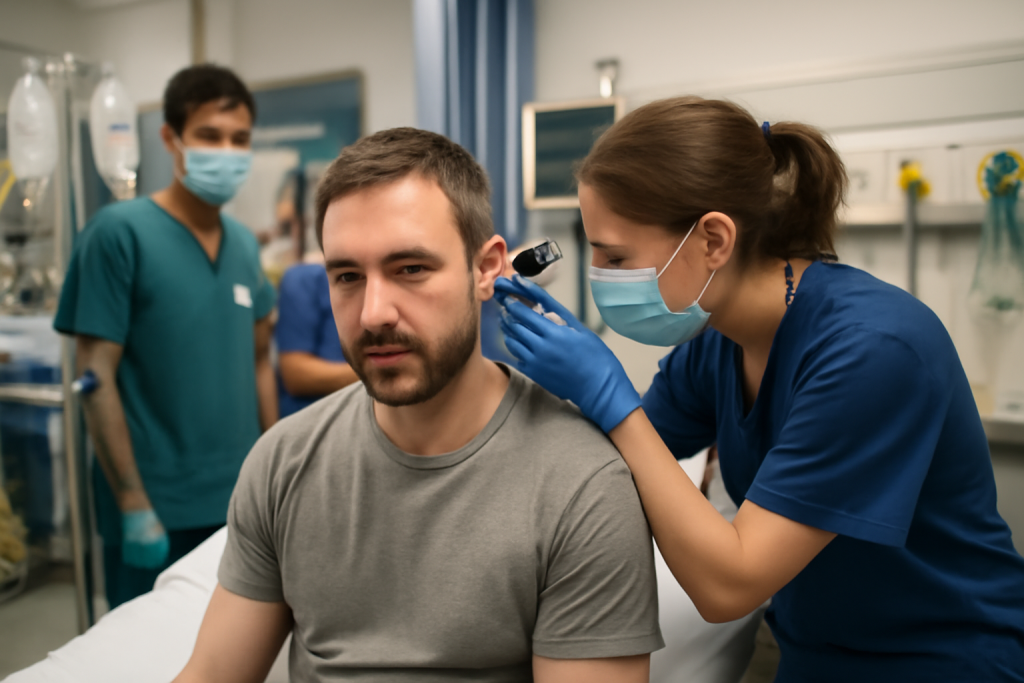
Examination should include documentation of cranial nerve function (including extraocular movements, pupillary reflexes, facial symmetry, and gag reflex), assessment of limb tone and power in a systematic descending pattern, and a thorough search for injection sites or wound infections. Fixed, dilated, or poorly reactive pupils are an important autonomic feature that help differentiate botulism from Guillain-Barre syndrome, in which pupils are typically spared.
Investigations and Their Limitations
No bedside investigation confirms botulism. Diagnosis is primarily clinical, and no result should delay escalation or antitoxin request if clinical suspicion is high. Nonetheless, the following investigations are indicated:
- Serum, stool, and wound swabs for toxin detection via mouse bioassay and PCR, co-ordinated through the UKHSA. These tests have turnaround times of days and are conducted at reference laboratories.
- Nerve conduction studies and electromyography (EMG): characteristic findings include low-amplitude compound muscle action potentials (CMAPs) with facilitation on high-frequency repetitive nerve stimulation, reflecting the presynaptic nature of the block. This differentiates botulism from myasthenia gravis, which shows a decremental response, and from Guillain-Barre syndrome, which typically shows demyelinating changes on nerve conduction.
- Lumbar puncture: cerebrospinal fluid is normal in botulism. Elevated CSF protein without pleocytosis (cytoalbuminous dissociation) is characteristic of Guillain-Barre syndrome and is a useful differentiating investigation.
- CT brain: indicated to exclude structural causes of cranial nerve palsies and bulbar dysfunction, but will be normal in botulism.
- Forced vital capacity (FVC): bedside spirometry is essential for serial respiratory monitoring. An FVC below 1 litre, or progressive decline, indicates impending respiratory failure and the need for early intubation. Do not wait for hypoxia or hypercapnia; by this point, respiratory reserve is critically compromised.
Airway and Critical Care Escalation
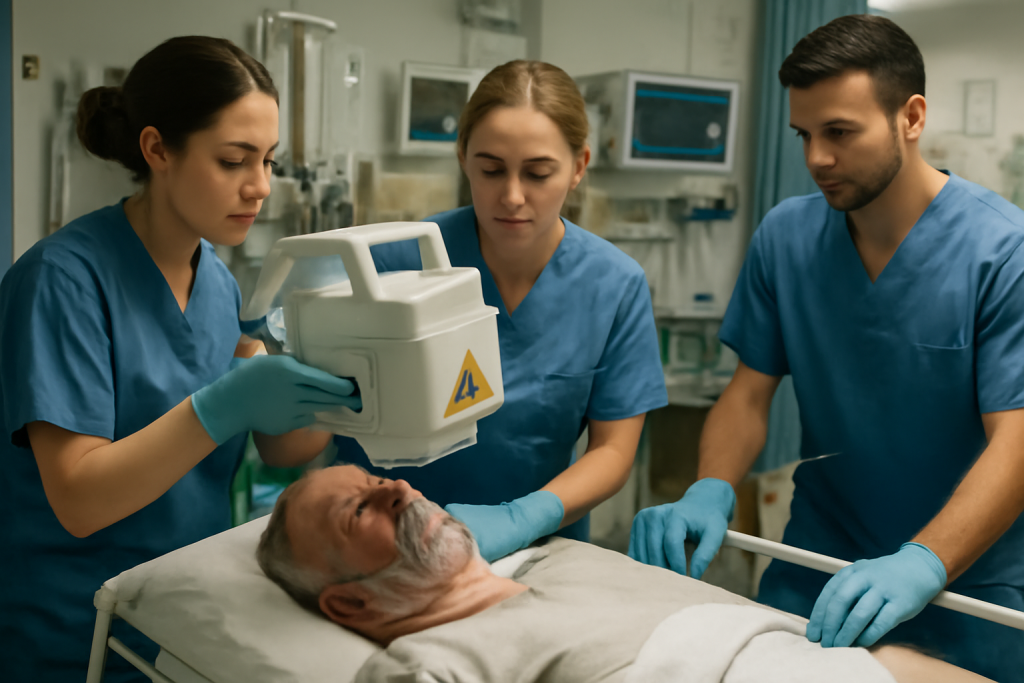
Airway management is the immediate priority. Early involvement of anaesthetics and critical care is mandatory. Botulism-related respiratory failure is insidious, and patients can deteriorate rapidly from ambulant to apnoeic. Awake fibre-optic intubation or rapid sequence induction should be planned with senior anaesthetic support. Prolonged mechanical ventilation is anticipated given the irreversibility of toxin binding. ICU notification, and clear communication regarding the likely duration of ventilatory support, is essential from the outset.
Heptavalent Botulinum Antitoxin
In the UK, heptavalent botulinum antitoxin (HBAT), covering serotypes A through G, is the treatment of choice and is held by the UKHSA. It is not stocked in individual hospital pharmacies. The treating clinician must contact the UKHSA Health Protection duty officer, available 24 hours a day, who will authorise and arrange emergency release. Antitoxin neutralises circulating, unbound toxin only; it cannot reverse toxin that has already bound to nerve terminals. This makes early administration critical, ideally before paralysis is established or progressing rapidly. Candidates preparing FRCEM SBA toxicology questions should know this mechanistic rationale, as distractors in exam stems will often suggest antitoxin can reverse established paralysis.
Supportive care, including nutritional support, pressure area care, prevention of deep vein thrombosis, and bladder catheterisation for urinary retention, forms a major component of ongoing management. Antibiotics are indicated for wound botulism to eradicate the toxin-producing organism; wound debridement may also be required. Aminoglycosides should be avoided as they potentiate neuromuscular blockade.
How the FRCEM SBA Exam Tests Botulism
The RCEM curriculum explicitly includes toxicology and neuromuscular emergencies within the FRCEM SBA syllabus. Botulism questions typically appear as clinical scenario stems in which the candidate must identify the most likely diagnosis from a differential that includes Guillain-Barre syndrome, myasthenia gravis, stroke, and Lambert-Eaton myasthenic syndrome. The discriminating clinical features tested are the descending pattern of weakness, pupillary abnormalities, autonomic features, the absence of sensory deficits, and the epidemiological context (injecting drug use or recent suspicious food ingestion).
A second question archetype targets management: candidates must identify the correct initial investigation, the correct source of antitoxin, or the appropriate public health notification. A frequent incorrect answer involves candidates selecting edrophonium testing or acetylcholinesterase inhibitors, which are relevant to myasthenia gravis but inappropriate and potentially harmful in botulism. Similarly, candidates may incorrectly select aminoglycosides as antibiotic therapy for wound botulism, not recognising their neuromuscular blocking properties. Working through FRCEM SBA practice questions covering neuroparalytic illness systematically is the most reliable way to consolidate these distinctions.
Revision Pearls: High-Yield Facts for FRCEM SBA Toxicology Questions
- Botulism causes a descending flaccid paralysis. Guillain-Barre syndrome causes an ascending flaccid paralysis. This directional distinction is a classic SBA discriminator.
- Pupils are typically fixed and dilated in botulism due to autonomic involvement. Pupillary sparing favours Guillain-Barre syndrome.
- CSF is normal in botulism. Cytoalbuminous dissociation (raised protein, normal cell count) is characteristic of Guillain-Barre syndrome.
- EMG shows facilitation on high-frequency repetitive stimulation in botulism (presynaptic block). Myasthenia gravis shows decrement (postsynaptic block).
- Wound botulism in PWID typically lacks a GI prodrome. The absence of nausea and vomiting does not exclude the diagnosis.
- HBAT is obtained via the UKHSA duty officer, not from hospital pharmacy. Know this pathway.
- Aminoglycosides are contraindicated in botulism. For wound botulism, use penicillin or metronidazole instead.
- Botulism is a notifiable disease under the Health Protection (Notification) Regulations 2010. A single case must be reported to the local health protection team immediately.
Common Pitfalls: Where Candidates Lose Marks
- Confusing the direction of paralysis: selecting Guillain-Barre syndrome because the stem mentions weakness without carefully noting the cranial nerve involvement preceding limb weakness.
- Attributing fixed dilated pupils to a structural cause (herniation) and pursuing unnecessary neuroimaging before considering botulism in an alert patient with bulbar symptoms.
- Selecting edrophonium or pyridostigmine as management, confusing the clinical picture with myasthenia gravis.
- Selecting gentamicin or another aminoglycoside as the antibiotic for wound botulism, worsening neuromuscular blockade.
- Failing to recognise that antitoxin does not reverse established paralysis and that early administration is critical, answering that antitoxin is indicated only after mechanical ventilation is commenced.
- Not recognising the public health implications: a candidate who manages the individual patient correctly but omits UKHSA notification in a scenario involving a suspicious food cluster will lose marks on a multi-part question.
How EM Learning Centre Supports Your MRCEM Single Best Answer Revision
Botulism exemplifies the type of topic that FRCEM SBA toxicology questions exploit: rare enough to create uncertainty, mechanistically rich enough to generate multiple question stems, and clinically dangerous enough that examiners rightly expect trainees to know it well. Revision requires structured, evidence-based material presented alongside worked clinical questions that test application rather than mere recall.
At the EM Learning Centre homepage, you will find a comprehensive question bank and structured lesson library designed specifically for this level of preparation. The MRCEM Single Best Answer revision course at EM Learning Centre maps directly to the RCEM curriculum, covering toxicology, neurology, critical care, and the full breadth of FRCEM SBA clinical scenarios with detailed explanations and referenced teaching. Whether you are working through FRCEM SBA practice questions in a focused revision block or identifying gaps in your knowledge before exam day, the platform provides the depth and structure that peer-reviewed exam preparation demands. Alongside topics such as acute allergy, anaphylactoid reactions, angioedema, hereditary angioedema, and urticaria covered in the MRCEM Single Best Answer course lessons, botulism sits within a broader toxicology and immunology curriculum that rewards systematic study.
If you are in the final weeks before your FRCEM SBA exam, prioritise clinical scenarios over passive reading, review the RCEM curriculum mapping, and ensure your toxicology revision includes the full neuroparalytic differential. The marks are there to be taken by candidates who understand the mechanisms, not just the headlines.
References
- UK Health Security Agency. Botulism: clinical features, epidemiology, and guidance for health professionals. NHS and UKHSA guidance.
- Royal College of Emergency Medicine. RCEM Curriculum and Syllabus for Emergency Medicine. RCEM curriculum documentation.
- Bhatt DL, et al. Botulism: a review for clinicians. The BMJ.
- National Institute for Health and Care Excellence. Botulism: recognition and management. NICE guidance.
- Resuscitation Council UK. Advanced Life Support and airway management guidelines. Resuscitation Council UK.